Euclid's The Elements of Geometry (c.300 BCE), was one of the most important early texts on geometry, in which he presented geometry in an ideal axiomatic form, which came to be known as Euclidean geometry.
In the early 17th century, there were two important developments in geometry. The first and mostm iportant was the creation of analytic geometry, or geometry with coordinates and equations, by Rene Descartes (1596–1650) and Pierre de Fermat (1601–1665). The second geometric development of this period was the systematic study of projective geometry by Girard Desargues (1591–1661). Projective geometry is the study of geometry without measurement, just the study of how points align with each other.
Geometry is still feeling the effects of two developments from the nineteenth century. Two of the master geometers of the time were Bernhard Riemann, working primarily with tools from mathematical analysis, and introducing the Riemann surface, and Henri Poincaré, the founder of algebraic topology and the geometric theory of dynamical systems.
As a consequence of these major changes in the conception of geometry, the concept of 'space' became something rich and varied, and the natural background for theories as different as complex analysis and classical mechanics. The traditional type of geometry was recognised as that of homogeneous spaces, those spaces which have a sufficient supply of symmetry, so that from point to point they look just the same
Contemporary geometry
Some of the representative leading figures in modern geometry are Michael Atiyah, Mikhail Gromov, and William Thurston. Geometry now is, in large part, the study ofstructures on manifolds, that have a geometric meaning in the sense of the principle of covariance that lies at the root of general relativity theory, in theoretical physics.
Contemporary Euclidean geometry
The study of traditional Euclidean geometry is by no means dead. It is now typically presented as the geometry of Euclidean spaces of any dimension, and of the Euclidean group of rigid motions. The fundamental formulae of geometry, such as the Pythagorean theorem, can be presented in this way for a general inner product space.
Euclidean geometry has become closely connected with computational geometry, computer graphics, discrete geometry, and some areas of combinatorics. Momentum was given to further work on Euclidean geometry and the Euclidean groups by crystallography and the work of H. Geometric group theory is an expanding area of the theory of more general discrete groups, drawing on geometric models and algebraic techniques.
Algebraic geometry
The field of algebraic geometry is the modern incarnation of the
Cartesian geometry of co-ordinates.
The geometric style which was traditionally called the Italian school is now known as birational geometry. Objects from algebraic geometry are now commonly applied in string theory, as well as diophantine geometry.
Methods of algebraic geometry rely heavily on sheaf theory and other parts of homological algebra. For practical applications, Gröbner basis theory and real algebraic geometry are major subfields.
Differential geometry
Differential geometry, which in simple terms is the geometry of curvature, has been of increasing importance to mathematical physics since the suggestion that space is not flat space. Contemporary differential geometry isintrinsic, meaning that space is
a manifold and structure is given by a Riemannian metric, or analogue, locally determining a geometry that is variable from point to point. Topology and geometry
The field of topology, which saw massive development in the twentieth century, is in a technical sense a type of transformation geometry, in which transformations are homeomorphisms. Contemporary geometric topology and differential topology, and particular

Showing posts with label Geometrical Patterns. Show all posts
Showing posts with label Geometrical Patterns. Show all posts
Monday, 13 September 2010


The Basic Postulates & Theorems of Geometry
These are the basics when it comes to postulates and theorems in Geometry. These are the ones that you have to know.
Postulates
A) Unique Line Assumption: Through any two points, there is exactly one line. Point-Line-Plane Postulate
Note: This doesn't apply to nodes or dots.
B) Dimension Assumption: Given a line in a plane, there exists a point in the plane not on that line. Given a plane in space, there exists a line or a point in space not on that plane.
C) Number Line Assumption: Every line is a set of points that can be put into a one-to-one correspondence with real numbers, with any point on it corresponding to zero and any other point corresponding to one.
Note: This doesn't apply to nodes or dots. This was once called the Ruler Postulate.
D) Distance Assumption: On a number line, there is a unique distance between two points.
E) If two points lie on a plane, the line containing them also lies on the plane.
F) Through three noncolinear points, there is exactly one plane.
G) If two different planes have a point in common, then their intersection is a line.
Euclid's Postulates
A) Two points determine a line segment.
B) A line segment can be extended indefinitely along a line.
C) A circle can be drawn with a center and any radius.
D) All right angles are congruent.
Note: This part has been proven as a theorem. See below, proof.
E) If two lines are cut by a transversal, and the interior angles on the same side of the transversal have a total measure of less than 180 degrees, then the lines will intersect on that side of the transversal.
Polygon Inequality Postulates
Triangle Inequality Postulate: The sum of the lengths of two sides of any triangle is greater than the length of the third side.
Quadrilateral Inequality Postulate: The sum of the lengths of 3 sides of any quadrilateral is greater than the length of the fourth side.
See Algebra Postulates
Theorems
Euclid's First Theorem: The triangle in the picture is an equilateral triangle. See construction/proof at http://aleph0.clarku.edu/~djoyce/java/elements/elements.html.
Note: D. Joyce's Elements page (the link above) is where you'll find anything else you need to know about Euclid's ideas, postulates, and theorems.
Line Intersection Theorem: Two different lines intersect in at most one point. For proof see Unique Line Assumption
Betweenness Theorem: If C is between A and B and on, then AC + CB = AB.
Related Theorems:
Theorem: If A, B, and C are distinct points and AC + CB = AB, then C lies on
Theorem: For any points A, B, and C, AC + CB
Pythagorean Theorem: a2 + b2 = c2, if c is the hypotenuse.
Right Angle Congruence Theorem: All right angles are congruent. See proof.
Note: While you can usually get away with not knowing the names of theorems, your Geometry teacher will generally require you to know them.
lines,planes and space
Lines
A line is a one-dimensional figure. That is, a line has length, but no width or height. Basically, a line is made up of an infinite number of points. Points in the same line are called colinear. Between each point is another point. This continues on forever. You can never run out of points to discover in a line. However, when you are talking about points as dots, you can get something called a discrete line. A discrete line is a line made up of dots with space between the centers of the dots. A dense line is a line that is the shortest path between two points. The number line, or coordinatized line, is a line where every point is represented by a number and vice versa. The number line is a one-dimensional graph. See the paragraph about nodes to find out about networks and arcs.
If you have two points A and B, the line that contains them is the set of points consisting of the distinct points A and B, all of the points between them, all points for which A is between them and B, and all points for which B is between them and A. A line like that would be written 

Every line is either horizontal, vertical or oblique. Horizontal and vertical speak for themselves, and an oblique line is any line that isn't horizontal or vertical. Horizontal lines have a slope of zero. Vertical lines are said to have infinite slope, because they just go straight up and not over. People just can't stand that zero in the denominator. Here's something I bet you didn't know: In space, vertical lines never meet (they just go straight up/down), but it is possible for horizontal lines to meet (check out the corner of the ceiling - two horizontal lines meet there (the edge of the two walls)). Okay, so maybe you did know that.
There are four different relationships that two lines can have. Lines can be identical, intersecting, parallel, perpendicular, or skew. Identical lines are lines that coincide. Therefore, they are the same line. The second one is the most obvious. Intersecting lines are lines that share a point. Parallel lines are coplanar lines that never intersect. They always have a certain distance between them and always have the same direction. See the page on parallel lines for more information. Perpendicular lines are lines that intersect in one point and form a 90 degree angle while they're at it. They have a page of their own, too. Skew lines only happen in space. They are noncoplanar lines that never intersect. Unlike parallel lines, however, they don't always have a set distance between them, nor do they always have the same direction.
.
Planes
Planes are two-dimensional. A plane has length and width, but no height, and extends infinitely on all sides. Planes are thought of as flat surfaces, like a table top. A plane is made up of an infinite amount of lines. Two-dimensional figures are called plane figures. While this really should be in Algebra, coordinate planes are two-dimensional graphs that use the ordered pair to locate points. Another name for coordinate planes are Cartesian planes.
.
Space
There's been a request to add something about space here. Space is the set of all points. It is made up of an infinite number of planes.Figures in space are called solids or surfaces. Coordinate space uses three coordinates. Instead of an ordered pair, an ordered triple is used. The new variable, z, measures the distance forwards or backwards that you move. The ordered triple looks like this: (x, y, z). You might see more on space and 3-D figures later, in a different section.
Points
Points are the basis of all Geometry. There are so many things you can do with the little buggers that the possibilities are endless. Points are zero-dimensional. That basically means that they have no height, length, or width. They are just there.
There are four main definitions of a point. They are the dot, the exact location, the ordered pair, and the node. A point has four definitions because, over the years, many different mathematicians have come up with their own ideas as to what a point should be. Since their ideas were all equally true, the point was given four main definitions instead of a single definition. In fact, the point is considered undefined for that reason (among others). When being written out, points are always represented by a capitol letter. If a point is on a line, it is often represented by the same letter.
The first definition of a point is the dot. This was probably the first kind of point ever thought up. You see, a dot has size - it has a definite, measureable, length and width. Probably the best example of a dot today would be the pixel. Yup, that's right - a pixel. Those tiny spots of color that make up your computer screen. A matrix is a rectangular array made up of lots of pixels, so that's what your computer screen is. As you most likely know, the more pixel in a computer or TV screen, the better the resolution.
The second definition of a point is an exact location. The exact location is the perfect example of the normal, zero-dimensional point. No matter how much you zoom in, there will always be another point in between two others. This definition of a point was discovered sometime between 550 B.C. and 150 A.D. One example of where these are used in real life is in measuring distances, especially between two cities. Some cities are more than a mile across, so mapmakers have to pick one exact location in the city to measure from. One use of the exact location ties in with the the next definition, the ordered pair. The number line, or coordinatized line, is a line where every point is represented by a number and vice versa.
The third definition of a point is the ordered pair. The ordered pair was discoverd around 1630 A.D. by two mathematicians named Pierre de Fermat and René Descartes. You've probably heard of the latter before. Basically, an ordered pair is a pair of numbers in parentheses used to locate an exact location on a coordinate plane. The first number, represented by the variable x, tells you how far along the x-axis the point is(to the right or left, depending on the "polarity"/direction of the variable). The second number does the same, just along the y-axis (up and down). Ordered pairs that consist of whole numbers are called lattice points. Numbers in a number line, coordinate plane, or coordinate space, have both magnitude and direction. Magnitude is its distance from the origin, and direction is its positivity or negativity. The origin is the center of any graph. It marks the place where the measurements start. Everything one one side is positive, and everything along the other side is negative. The origin extends its "neutrality" along lines called the x, y, and z-axes. These lines need only one variable to represent them. The variable whose name they carry is the one that represents them, and its value is always zero. The picture below shows you what I mean.

The last definition of the point is the node. A node is a type of point thatis zero-dimensional, and two nodes can have more than one line between them. Nodes exist only in networks, which are a series of nodes and arcs. Arcs are lines that may curve and aren't dense. Arcs only contain their endpoints. There is a special kind of network in which all arcs can be crossed without going over one more than once. It is called a traversible network. Another kind of network is a graceful network. This kind of network is really hard to make is and is great for extra credit projects. To make a network graceful with x arcs, you must label each node with a number from 0 to x so that, if you find the positive difference of two connecting nodes and label their common arc with it, all arcs are labeled from 1 to x. If a node has an even number if arcs going through it, it is called an even node. An odd node is just the opposite. Nodes are sometimes called vertices.
Four important characteristics help to distinguish the different definitions of points:
- Unique line - Do the points determine a single line?
- Dimension - Are the points without size?
- Number line - Can the points of a line be put into a one-to-one correspondece with real numbers?
- Distance - Is there a unique distance between two points?
Friday, 10 September 2010
What is Geomtery
Geometry is the visual study of shapes, sizes, patterns, and positions. It occurred in all cultures, through at least one of these five strands of human activities:
1. building/structures (building/repairing a house, laying out a garden, making a kite, ...)
2. machines/motion (using a pry-bar, riding a bike, sawing a board, swinging, ...)
3. navigating/star-gazing (How do I get from here to there?, using maps, ...)
4. art/patterns (designs, symmetries, representations, ...).
5. measurement (How big is it?, How far is it?, ...)
1. building/structures (building/repairing a house, laying out a garden, making a kite, ...)
2. machines/motion (using a pry-bar, riding a bike, sawing a board, swinging, ...)
3. navigating/star-gazing (How do I get from here to there?, using maps, ...)
4. art/patterns (designs, symmetries, representations, ...).
5. measurement (How big is it?, How far is it?, ...)


Simon C Page's Gerometric prints
Here are some of Simon C Page's works. I love him i love him i love him! Beautiful printed geometric designs.

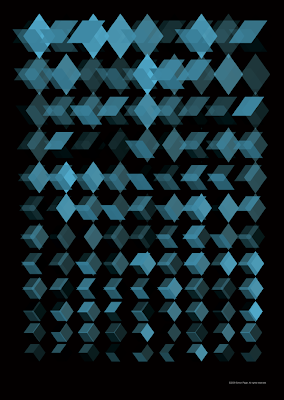


......I think I'm in love with him....
Simon C Page is a self-taught British graphic designer and illustrator.
I love many aspects of design but my main passions are typography art, illustration and geometric design. I would find it hard to choose a favourite and often I will try and combine these creative fields in to my design work.
I like to adapt and evolve my process to fit each project. I also like my work to evolve naturally and not stay static, often challenging myself with new self-initiated works, regularly showing variations in my creative process.


......I think I'm in love with him....
Subscribe to:
Posts (Atom)